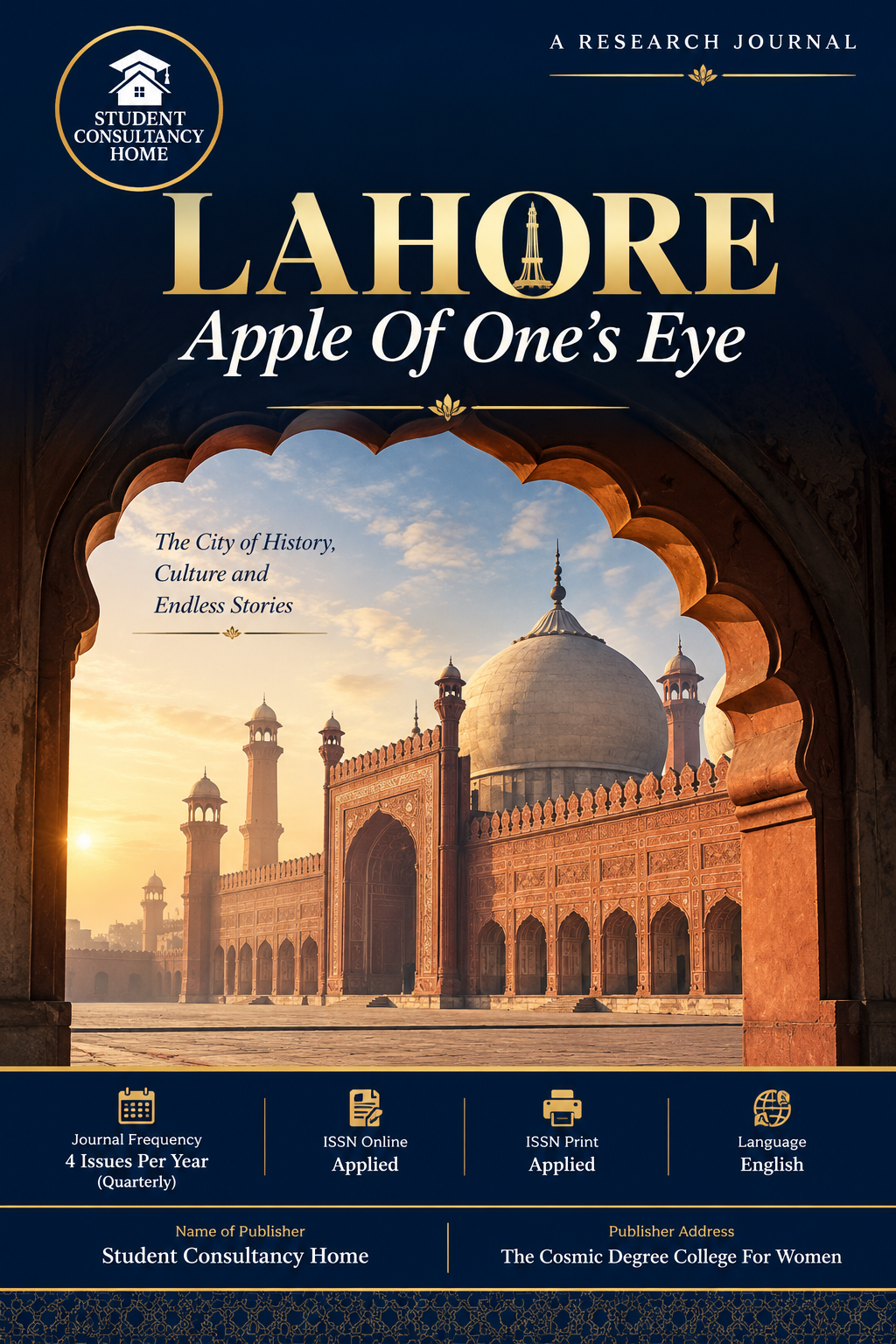
THE CHANGING FACE OF LAHORE: EXPLORING ITS CULTURE, HERITAGE AND URBAN DEVELOPMENT
Keywords:
Lahore, cultural heritage, urban development, urbanization, heritage conservation, cultural identity, sustainable development, historic preservation.Abstract
Lahore, one of Pakistan’s most historically significant and culturally vibrant cities, is experiencing rapid transformation as a result of urbanization, population growth, infrastructure development, and hanging social and economic conditions. This study explores the changing face of Lahore by examining the relationship between its rich cultural identity, historic heritage, and modern urban development. The city’s Mughal-era monuments, historic mosques, traditional bazaars, architectural landmarks, festivals, cuisine, and social traditions represent an important part of Pakistan’s cultural heritage. However, expanding urban infrastructure, commercial activities, changing land-use patterns, and increasing development pressures are shaping the city’s physical and social landscape. Recent research highlights both the opportunities and challenges associated with heritage conservation, urban expansion, and the revitalization of historic areas. This study adopts a qualitative, literature-based approach to examine how these transformations influence Lahore’s cultural identity, historic environment, and urban character. It also considers the challenges of preserving traditional neighbourhoods and community life while accommodating the needs of a growing metropolitan population. The study argues that sustainable urban development requires an integrated approach that balances modernization with heritage conservation, environmental protection, inclusive planning, and public participation. It concludes that Lahore’s future depends on its ability to embrace contemporary development without losing the cultural traditions, historical character, and collective memories that distinguish the city
References
Aslam, M., & Khan, U. A. (2025). Gentrification of the Walled City of Lahore: Contesting
Heritage, Power and Belonging. Journal of Asian Development Studies, 14(3), 107-
115.
Batool, Z., & Bahauddin, A. (2025). Navigating sense of place through lived spaces and the
memory of place in historic Anarkali Bazaar, Lahore. Built Heritage, 9(1), 3.
Cermeño, H., & Mielke, K. (2025). Endangered urban commons: Lahore’s violent heritage
management and prospects for reconciliation. In Access to the City: Governing
Housing, Services, and Urban In/Exclusion in Amritsar and Lahore (pp. 145-168).
Wiesbaden: Springer Fachmedien Wiesbaden.
Husnain, G. (2024). Revitalizing Historic Urban Centers: The Case of Lahore's Walled City.
Journal of Asian Development Studies, 13(2), 1190-1200.
Nadir, R., Munir, K., & Hussain, S. (2025). Turning Walled City Lahore into a spectacle: the
unintended consequences of heritage conservation. Third World Quarterly, 46(3),
353-371.
Waheed, H., & Naz, S. (2023). Socio-cultural aspects of identity formation of Lahore city.
Annals of Human and Social Sciences, 4(3), 01-12.